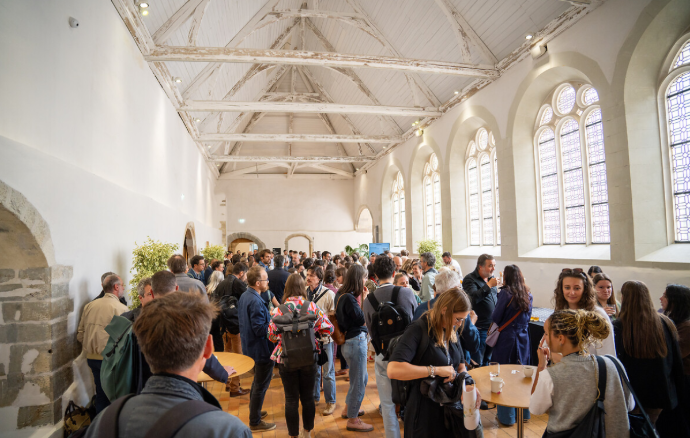
On 9 and 10 September, the Upcycling Trust partners met in Rennes for the project’s third Strategic Committee. Over two days, partners shared updates from their pilot projects, worked together on key deliverables and discovered the urban upcycling solutions developed by Rennes through visits to the city and the Villejean neighbourhood, where Rennes is developing its pilot.
It was a valuable opportunity to exchange experiences and identify common challenges and opportunities across the different pilot locations.
Sharing updates from the pilot projects
In Rennes, the proposals and the selection of suitable residential buildings in Villejean have now received political validation. They are now preparing the conditions for the first acquisitions, with the objective of acquiring 5 to 10 apartments in 2027. The next challenge will be to identify and engage with owners who may be interested in selling their homes through an OFS/BRS solution.
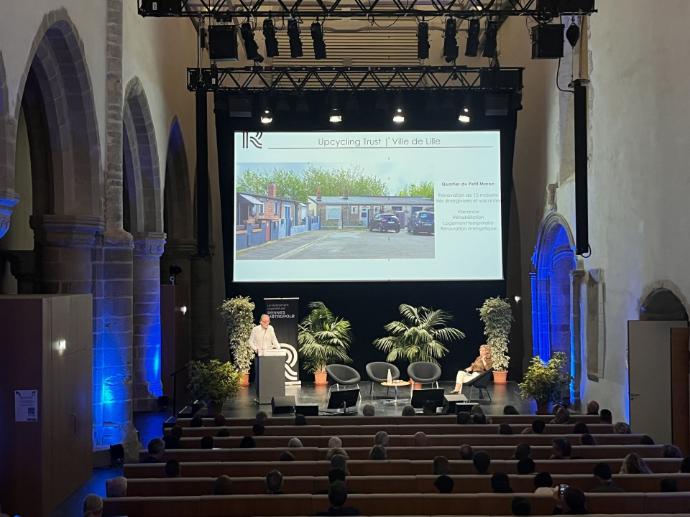
In Lille, following a financial study exploring multiple scenarios for the renovation of the Petit Maroc neighbourhood, the renovation of a pilot house is planned to start in January 2028, with the ambition of using this project as a demonstration that could be replicated in the neighbourhood.
In Ghent, the pilot focuses on the renovation of a partially fire-damaged private property in Spijkstraat. It will be transformed into four one-bedroom homes and a community space, with the aim of offering permanently affordable housing through a combination of donation and purchase by the Trust, which would retain ownership of the land. CLT Gent hopes to complete the works by the end of 2027.
In Brussels, the pilots are moving forward, with work continuing on the Rue de Rome and Rue de Savoie projects. Community Land Trust Brussels is also exploring how the actual energy consumption of owner-occupiers can be taken into account when defining renovation works, with the aim of keeping costs under control while meeting energy standards.
In Cork, our partner Self-Organised Architecture (SOA) is developing a concept for 2 pilots with vacant derelict council houses dating from the early 20th century located in Architectural Conservation Areas.
Workshops to move the work forward
The Strategic Committee was also a chance to work collectively on the different work packages of our Interreg partnership.
The workshops led by VUB focused on life-cycle cost strategies to encourage more ambitious architectural and circular choices in the renovation pilots. It looked at the relationship between material choices, costs and environmental impacts at different stages of a building's life-cycle, from purchase and maintenance to end-of-life. This helped partners reflect on how these different dimensions can be considered together with (future) residents when making renovation choices.
The workshop led by Habiter 2030 focused on the replicability of the model. Partners discussed which aspects of the Upcycling Trust model still need to be explored further if it is to be adapted and replicated in other contexts. Among the topics identified were circularity, communication and engagement with residents, and the way buildings are used. These areas could provide useful directions for the next stages of the project.
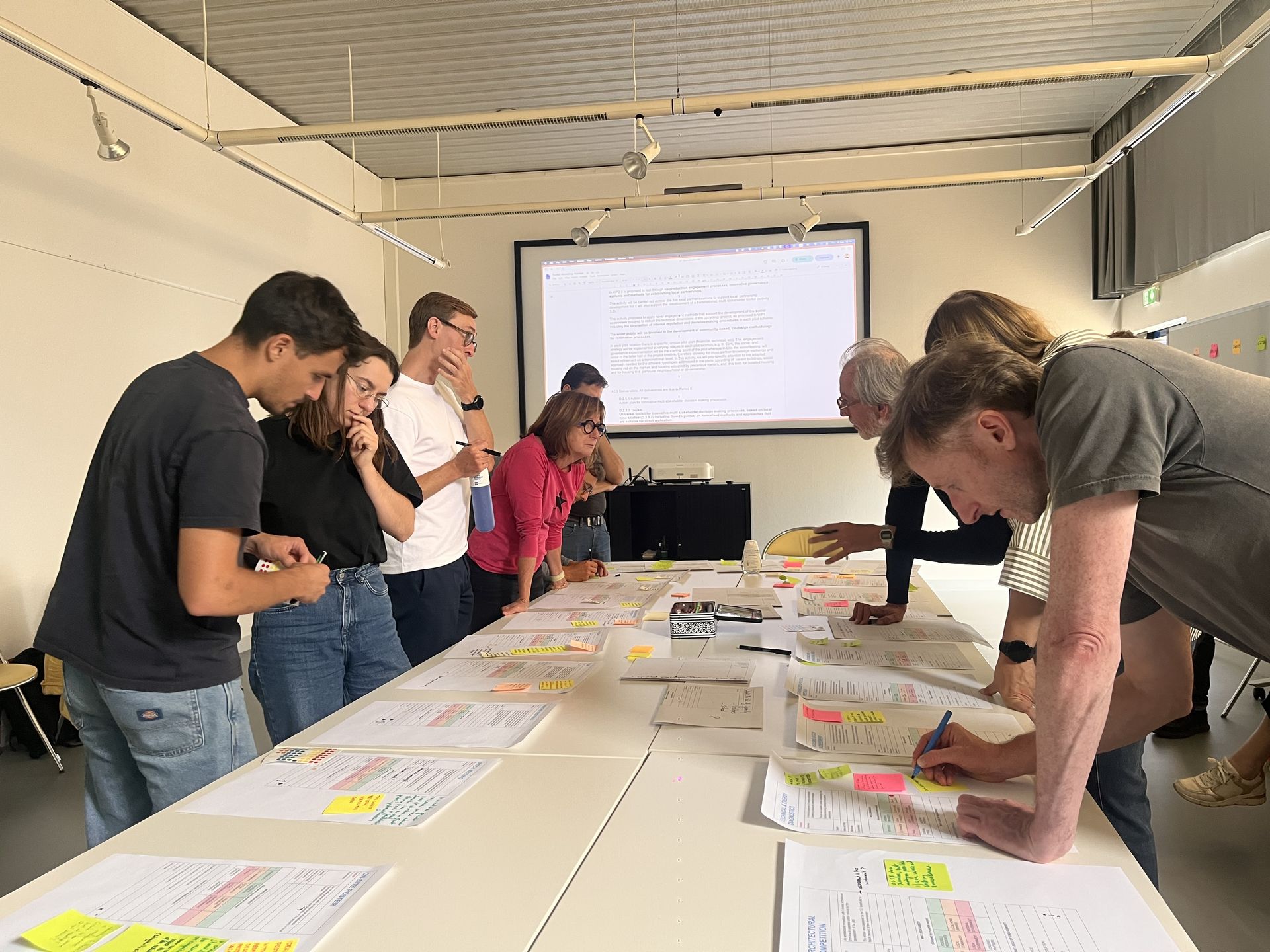
Partners also focused on stakeholder engagement. Using examples from the different pilots, they shared and discussed practical ways of involving the people and organisations around each project, from residents and homeowners to local authorities, NGOs and other partners. The discussion drew on a wide range of approaches, including online surveys, focus groups, outreach campaigns, one-to-one meetings, flyers, public events, stakeholder meetings and neighbourhood activities. The objective is to collect these experiences and lessons learned to contribute to the development of a stakeholder engagement toolkit.
Discovering the Villejean neighbourhood
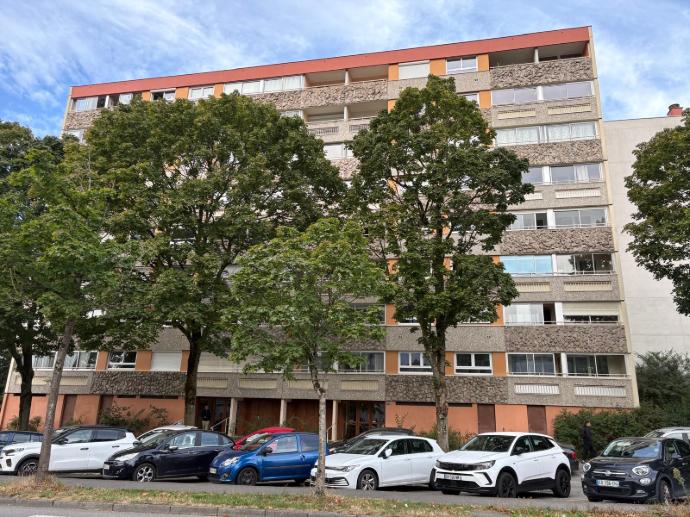
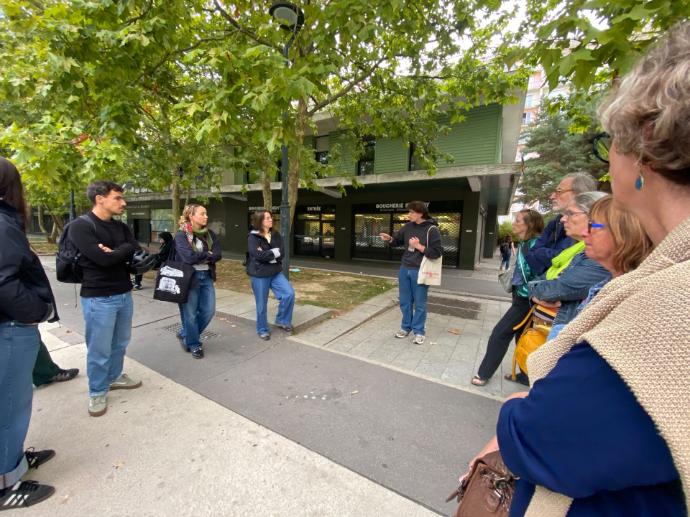
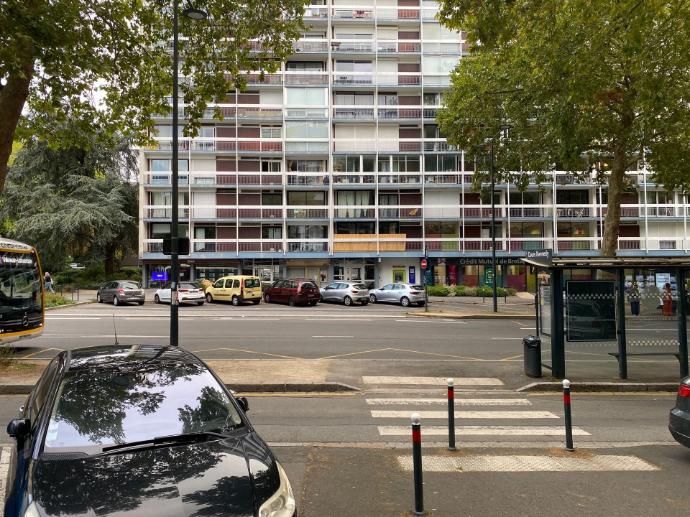
The partners also had the opportunity to visit Villejean, the neighbourhood where Rennes is exploring the use of the “Bail Réel Solidaire” model.
Rennes Métropole has carried out an assessment of 52 residential buildings in the neighbourhood, looking at residents' profiles, the condition and size of the housing units, property values and other housing-market characteristics. This work has helped identify residential multi-apartment buildings where the Organismes de Foncier Solidaire could potentially acquire individual homes from 2027 onwards to keep them affordable over time thanks to the ‘Bail Réel Solidaire’ mechanism.
A conference on building reuse and affordable housing
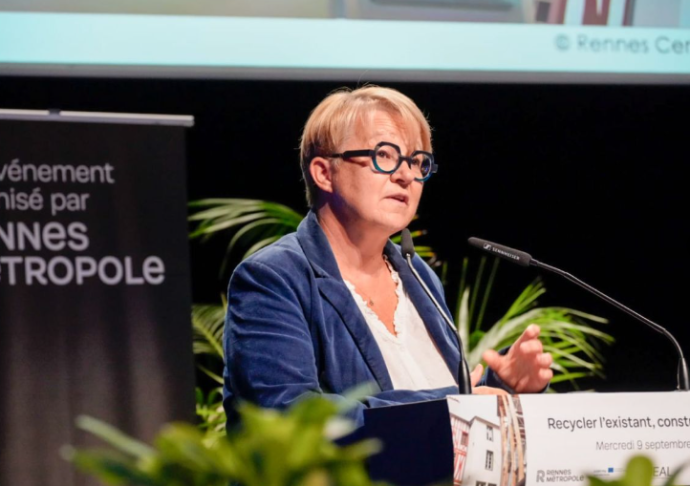
Partners also took part in a conference organised by Rennes Métropole on building reuse and affordable housing. The first part explored different ways of making better use of existing buildings: adding new housing units through vertical extensions, adapting housing typologies, changing the use of buildings and transforming existing buildings into new homes.
The second part focused on the question of affordable housing and on how mechanisms such as the ‘Bail Réel Solidaire’ can help make housing more accessible while keeping it affordable over time. Experiences from Paris, Lille and Rennes highlighted both the potential of these approaches and the economic and practical challenges of intervening in existing buildings.
The conference was also an opportunity to present the Upcycling Trust partnership and discuss how Community Land Trusts or Organismes de Foncier Solidaire could contribute to addressing housing needs and supporting renovation.
From shared experiences to the next steps
After two days of discussions, workshops and visits, partners left Rennes with a clearer view of the progress made across the different pilots and of the questions that still need to be explored.
The pilot projects will move towards concrete implementation over the next two years. This will be an important period for the partnership to gather and share lessons from the different pilots, feed them into the toolkits, and explore how the Upcycling Trust model can be scaled up and replicated across Europe.
→ Want to know more about the ideas and principles behind Upcycling Trust? Read our Manifesto for a fair renovation model.
→ Stay connected with the project: subscribe to the Upcycling Trust newsletter and follow the progress of our pilots and tools.